
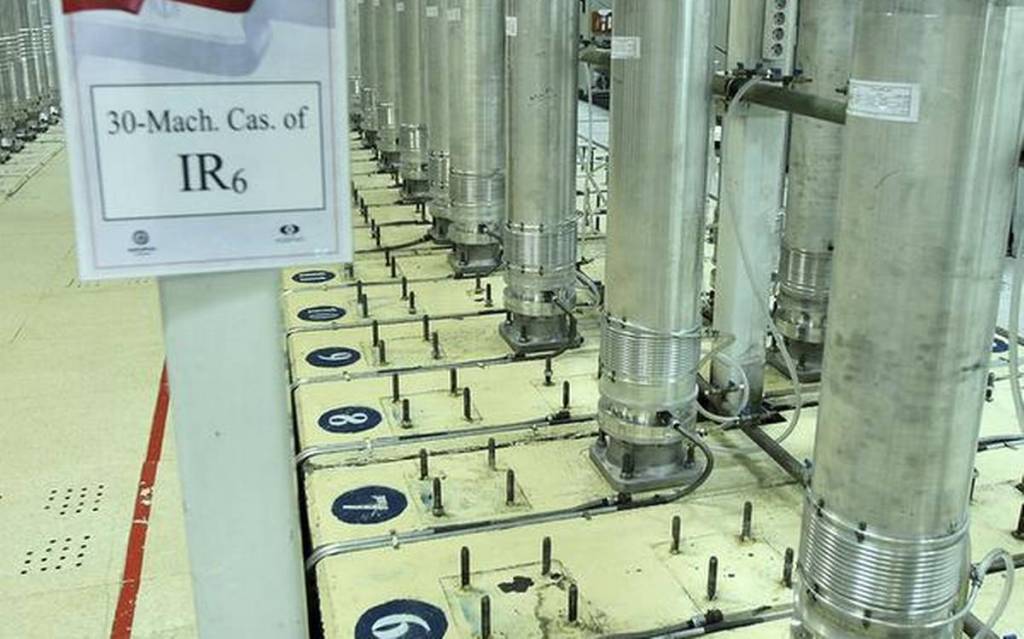
Iran has started to inject uranium gas into centrifuges at its Fordow nuclear facility with plans to be fully operational evenutally, the country’s president said.
On Wednesday, Hassan Rouhani tweeted his “thanks to US policy and it’s allies” over the decision to take a further step back from the 2015 international nuclear treaty.
“Iran’s fourth step in reducing its commitments under the [Joint Comprehensive Plan of Action (JCPOA)] begins today by injecting gas into 1,044 centrifuges,” he wrote.
“Thanks to US policy and its allies, Fordow is coming back soon and will be operational.”
Below you can see what a Nuclear Enrichment Plant looks like:
Since the US pulled out entirely last year, Iran has gradually moved further away from the stipulations outlined in the deal.
The US later imposed strict sanctions on Iran, crippling the economy of the country.
Meanwhile, nuclear inspectors with the International Atomic Energy Agency ( IAEA) said on Wednesday that they were on the ground in Iran and would report back on relevant activity.
“We are aware of fordow-related media reports today,” a spokesperson for the IAEA said. “Agency inspectors are on the ground in Iran and will report to IAEA headquarters in Vienna any relevant activities.”
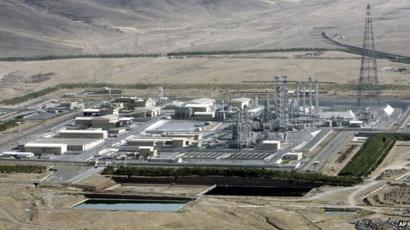
Five per cent enrichment versus 20 per cent
Wednesday’s news came hours after Iranian nuclear chief Ali Akbar Salehi said the country would start enriching unranium to a purity level of 5 per cent, which is 1.37 per cent higher than the deal agreed.
He went on to add that Iran had the capabilities to reach a 20% purity level, if necessary.
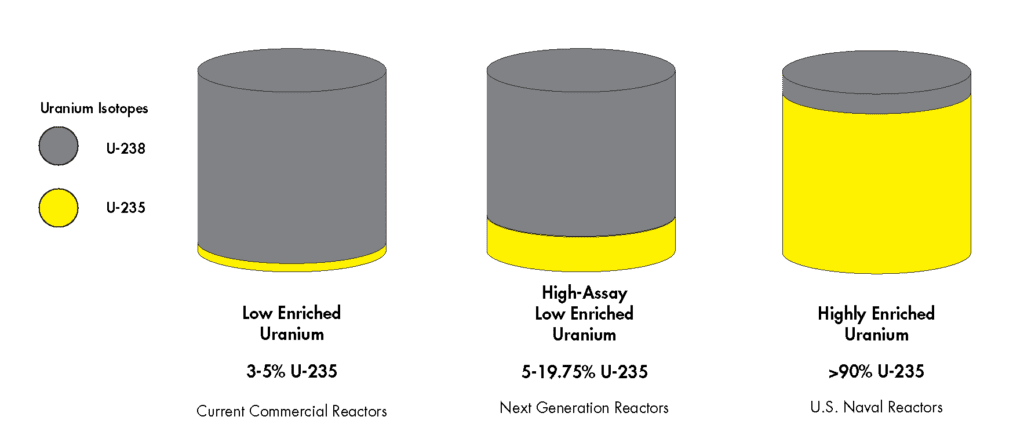
In order to put this in context, nuclear reactors generally use enriched uranium at a purity between 3-5 per cent.
Any concentration below 20 per cent is also considered to be low-enriched uranium (LEU), whereas high-enriched uranium (HEU) is anything higher.
How much do you need for a nuclear bomb?
To reach a level of arms considered, the purity would have to be around 80-90%.
A nuclear weapon with a lower concentration than this can still be created but the weapon would be much larger, heavier and difficult to move.
But don’t be fooled by the seemingly huge gap between enrichment of 20 per cent and 80 per cent.
Due to a larger number of undesirable atoms that need to be extracted, the most laborious part of the enrichment process is actually situated between the 0-20 per cent purity level.
But once 20 per cent is reached, the process of enrichment is then boosted to 90 per cent quite quickly.
Since then, a number of fellow signatories to the 2015 treaty have voiced their alarm at Iran’s latest announcement, working to try and rescue the treaty since the US pulled it out.
Russian Foreign Minister Sergei Lavrov said the developments were extremely alarming but expressed understanding of the behavior of Iran and placed the blame in the hands of the United States.
Meanwhile, French President Emmanuel Macron said the situation was “severe,” and it showed Iran’s “explicit and blunt way” of withdrawing from the JCPOA.
Read Full JCPOA Guidelines here
Speaking at the end of his three-day State visit to China, Macron said: “I think Iran has decided, for the first time, to leave the JCPOA agreement, which marks a profound shift, explicitly and bluntly.”
The US also voiced concern with a spokesman for the state department saying on Wednesday that the latest move marked a “big step in the wrong direction.”
Later, they reiterated US support for the role of the IAEA in observing Iran’s nuclear activity.
Learn More: Nuclear Program of Iran
 allaboutnuclear.tech.blog