
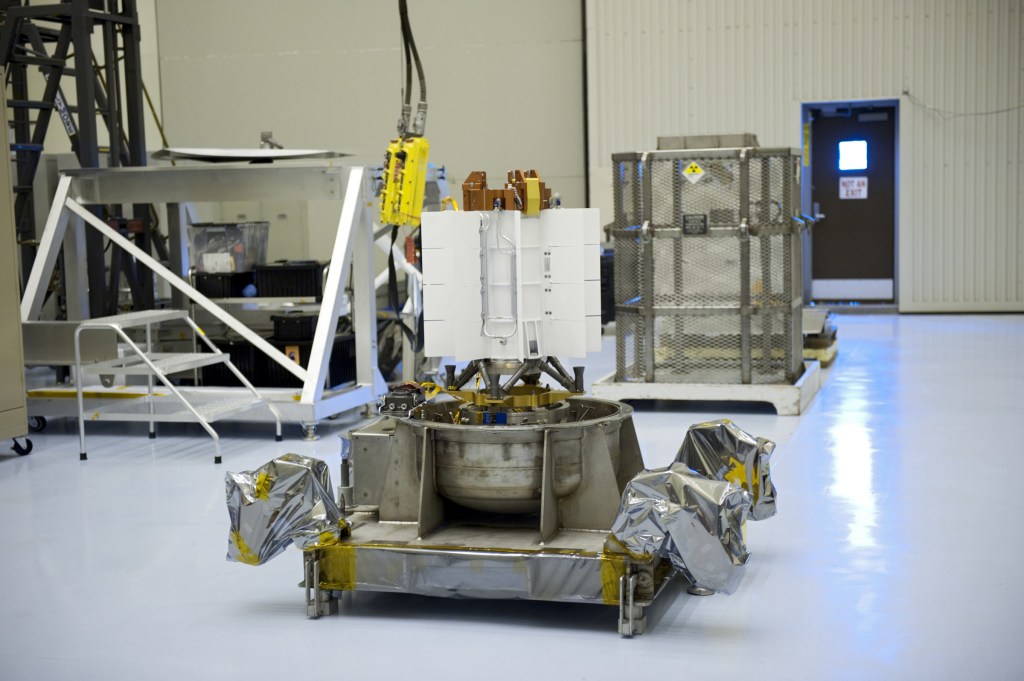
The US Department of Energy (DOE) has delivered the nuclear power system for the Perseverance rover for NASA’s Mars 2020 mission which is due to launch next month. The Multi-Mission Radioisotope Thermoelectric Generator (MMRTG) was fuelled, built and tested by DOE’s national laboratories.
Radioisotope power systems (RSPs) convert the heat generated by the natural decay of plutonium-238 (Pu-238) into electrical power. The MMRTG will supply electricity for the basic operation of the rover and maintain its tools and systems at optimum temperatures. It has an operating life of 14 years.
The DOE restarted US production of Pu-238 in 2015 for the first time since 1988. It now maintains an essential infrastructure to help NASA fuel, build and test RPSs. Perseverance will be the first plutonium rover to be used by DOE’s Oak Ridge National Laboratory (ORNL), which, along with Idaho and Los Alamos National Laboratories, is working to increase U.S. production of Pu-238 for deep space exploration. ORNL automated part of the production process in February to produce up to 400 g of Pu-238 per year, bringing NASA ‘s target of 1.5 kilograms per year by 2025 closer.
The RPS for Perseverance was assembled, tested and delivered to the Kennedy Space Center in Florida by the Idaho National Laboratory (INL). The laboratory team will monitor the power system around the clock until the launch of the United Launch Alliance Atlas V 541 rocket, currently scheduled for 9:15 a.m. EDT on 17 July. Perseverance will land on Mars in February 2021 and spend at least one Mars year (two Earth years) exploring the landing site region, an ancient river delta in a lake that once filled the Jezero Crater planet.
DOE’s next MMRTG is scheduled to fuel Dragonfly’s rotorcraft mission to explore Saturn’s largest moon, Titan. The mission is scheduled to launch in 2026, arriving at Titan in 2034.
 allaboutnuclear.tech.blog